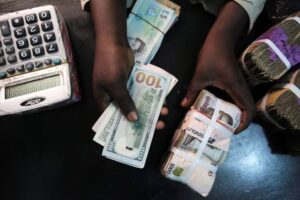
After a shaky start to the week, the Naira is showing signs of recovery, offering cautious optimism as foreign exchange supply begins to improve.
The Nigerian Naira recorded a modest rebound in midweek trading on Wednesday, opening at approximately ₦1,375 to the dollar. This marks a slight improvement from earlier losses seen on Tuesday, when the currency briefly weakened to around ₦1,390/$ before regaining some ground.
At the official Nigerian Foreign Exchange Market (NFEM), the local currency showed early stability. It opened close to ₦1,375 and maintained a relatively steady position through the morning session, reflecting improved market conditions.
Traders attribute this gradual recovery to increased dollar inflows, particularly from exporters who are converting foreign earnings to meet financial commitments as the month draws to a close. This boost in liquidity appears to be easing pressure on the currency.
The Central Bank of Nigeria (CBN) is also playing a key role in maintaining order within the market. Through its electronic trading system, the apex bank continues to monitor transactions and support transparency, helping to reduce volatility.
Meanwhile, activity in the parallel market remains relatively calm. In major commercial hubs like Lagos and Abuja, the dollar is being exchanged within the range of
₦1,420 to ₦1,435. Although this rate is higher than the official market, the gap between both markets has remained fairly stable, suggesting reduced speculative activity.
Bureau De Change operators report that demand for foreign currency remains consistent, especially for travel and remittance purposes. However, improved supply from official channels has helped prevent sharp fluctuations in recent days.
Several key factors are currently influencing the Naira’s performance. As is typical at month-end, companies are increasing demand for foreign exchange to settle international obligations. This demand, however, is being balanced by better liquidity in the system.
Nigeria’s external reserves, estimated at just under $50 billion, continue to provide a buffer for the currency, giving the Central Bank room to intervene when necessary. Additionally, strong crude oil prices—currently above $100 per barrel—are supporting foreign exchange inflows and boosting overall market confidence.
Looking ahead, analysts expect the Naira to trade within the ₦1,370 to ₦1,390 range in the coming days. They note that recent economic reforms and efforts to unify exchange rates are gradually improving stability in the market.
There is also growing interest from foreign investors, particularly as developments in the banking sector signal potential long-term strength in Nigeria’s economy.
While challenges remain, the current movement suggests a cautiously optimistic outlook for the Naira as the week progresses.