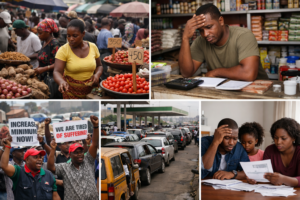
For millions of Nigerians, daily life is becoming a battle for survival. What used to be routine expenses transportation, food, and basic household needs are now stretching incomes to breaking point.
The rising cost of fuel and the instability of the naira have combined to create a harsh economic reality, one that is quietly but deeply affecting homes, businesses, and livelihoods across the country.
Businesses Fighting to Survive
Behind many shop counters and small businesses are stories of struggle.
Business owners are grappling with soaring fuel costs, which have pushed up the price of transporting goods and running generators. For many, profit has disappeared replaced by daily survival.
Some have increased prices just to stay open, while others are watching customers disappear because people simply can’t afford as much anymore.
Rising Fear of Job Losses
As pressure mounts, workers are beginning to feel the impact.
Companies are cutting costs, slowing recruitment, and in some cases letting staff go. The fear of losing a job is becoming more real, especially for those already living paycheck to paycheck.
For many Nigerians, one lost income can mean the difference between stability and hardship.
Workers Demand Relief
Labour unions have raised their voices, calling for urgent government action.
With inflation rising and salaries remaining the same, workers say they are no longer earning enough to meet basic needs. The demand is clear better wages and policies that can ease the burden on ordinary citizens.
The Reality for Everyday Nigerians
For the average Nigerian, the crisis is no longer just news it is personal.
Transport fares have doubled in some areas. Food prices are climbing weekly. Rent, school fees, and healthcare costs are becoming harder to manage.
Families are cutting down on meals, adjusting lifestyles, and making tough choices just to cope.
No Easy Way Out
While economic policies are being introduced, the relief many Nigerians hope for is yet to be felt.
Until incomes begin to match rising costs, the pressure will continue and for many, the struggle will remain a daily reality.