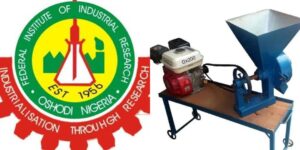
The Federal Institute of Industrial Research, Oshodi (FIIRO), Lagos, has raised concerns over a potential public health risk linked to the use of locally fabricated grinding machines.
According to the institute, these machines — commonly used to process tomatoes, peppers, onions, melon seeds and other food items — may be exposing consumers to harmful levels of metal contamination, potentially contributing to rising cases of organ failure and cardiovascular diseases in the country.
Concerns Over Contaminated Processing Equipment
FIIRO’s Director-General, Dr. Jummai Adamu Tutuwa, disclosed that investigations revealed traces of heavy metals in many locally made grinders. The metals identified include lead, copper, chromium, nickel, cadmium and manganese.
In addition, non-heavy metals such as calcium, magnesium, zinc and iron were also detected.
“Prolonged consumption of food contaminated with these metals may contribute to increasing cases of cardiovascular diseases and organ failure, even among young adults,” Dr. Tutuwa explained.
Safety Limits Allegedly Exceeded
Research conducted by FIIRO indicates that contamination levels in some areas exceed safety limits set by the World Health Organization (WHO) and the Food and Agriculture Organization (FAO).
Areas with heavy vehicular traffic and significant industrial activity were reportedly found to have the highest levels of contamination, heightening concerns about environmental exposure and food safety.
Health Risks of Heavy Metal Exposure
While certain metals occur naturally and are required in small amounts by the body, excessive accumulation can be toxic. Cadmium, in particular, was highlighted as a major concern due to its widespread industrial use and long-term environmental persistence.
Health experts warn that repeated exposure to contaminated food may allow these metals to build up in the body over time, potentially leading to cancer, organ failure and cardiovascular diseases.
Call for Stronger Regulation
FIIRO is urging authorities to strengthen regulation and enforcement standards for locally fabricated food processing machines. The institute also emphasized the need for public awareness campaigns to educate food vendors and consumers about potential risks.
Dr. Tutuwa stressed the urgency of the situation, calling on stakeholders to prioritize safer food processing methods.
“Reducing heavy metal contamination in locally processed foods is critical to lowering the nationwide burden of cardiovascular diseases, cancer and organ failure,” she said.