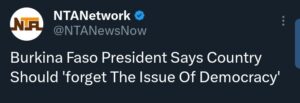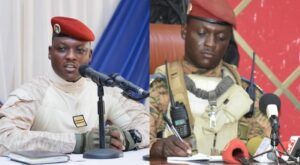
Burkina Faso’s leader, Ibrahim Traoré, has ignited fresh controversy after openly criticising democratic governance, declaring that it has failed to deliver stability and progress for his country.
Speaking during a televised interview on state media, Traoré argued that Burkina Faso must move beyond traditional democratic systems, describing them as ineffective in addressing the nation’s deep-rooted challenges.
A Shift Away From Democracy
In his remarks, the president made it clear that his administration is charting a different course.
“We must forget the issue of democracy… democracy kills,” he said, adding that such systems can amount to a form of “slavery.”
Instead, he emphasised a focus on what he described as a “revolutionary” approach aimed at rebuilding the country through what he called “conquest” and “refoundation.”
The statement signals a significant shift from earlier commitments to restore democratic rule following the 2022 military takeover that brought him to power.
Part of a Bigger Regional Trend
Burkina Faso’s direction reflects a broader pattern across the Sahel region. Countries like Mali and Niger have also experienced military coups in recent years, with similar promises to restore security and stability.
These nations have since distanced themselves from the Economic Community of West African States and formed a new alliance known as the Alliance of Sahel States, signalling a shift in regional political dynamics.
Security Crisis Still Deepens
Despite the strong rhetoric and promises of reform, the security situation in Burkina Faso remains deeply troubling. Armed groups linked to extremist networks continue to operate across large parts of the country, with reports suggesting that more than half of the territory is outside government control.
The humanitarian impact has also been severe, with millions displaced and widespread need for urgent assistance. Years of violence have left communities vulnerable, raising concerns about whether the current approach can deliver the stability citizens desperately need.
Global Attention and Growing Debate
Traoré’s comments are expected to intensify both local and international scrutiny, especially as questions grow about the future of governance in Burkina Faso.
While some may view his stance as a call for a new direction, others see it as a worrying departure from democratic principles at a time when stability remains fragile.