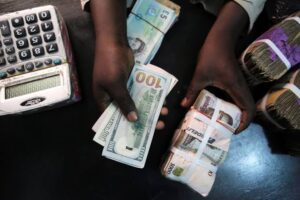
Is the Dollar Dropping? Check Out Today’s Naira Exchange Rates Before You Visit the Aboki

Nigeria’s foreign exchange market opened on Thursday, February 19, 2026, with the Naira posting a slight decline to ₦1,346.40 against the United States Dollar.
Early trading data indicates mild pressure on the local currency, as sustained demand for foreign exchange continues to influence market activity.
Official market records marginal dip
At the Nigerian Autonomous Foreign Exchange Market (NAFEM), the Naira opened at an average rate of ₦1,346.40 per Dollar, representing a modest drop from the previous session’s closing figure.
The currency initially showed relative strength around ₦1,340.00 before adjusting to its current level, reflecting steady demand for the Dollar within the official window.
Despite the downward movement, supply from institutional participants has helped contain volatility and prevent sharp fluctuations in the market.
Financial analysts believe the Central Bank is deliberately managing the exchange rate within the ₦1,340 to ₦1,350 range in a bid to promote stability and improve business planning.
Parallel market maintains premium
In the parallel market, commonly known as the black market, the Dollar continues to trade at a noticeably higher rate than in the official window.
Across major cities such as Lagos and Abuja, Bureau De Change operators are buying the Dollar at around ₦1,490, while selling rates range between ₦1,505 and ₦1,515.
Rates in this segment have remained relatively steady over the past 24 hours. Traders attribute the stability to balanced demand, particularly for personal travel allowances and overseas school fees.
However, the spread of more than ₦150 between the official and parallel market rates remains a source of concern. Economists warn that such a wide gap complicates efforts to achieve full exchange rate unification.
Key drivers behind the movement
Market experts point to fluctuations in global oil prices and tightening domestic liquidity as major factors influencing current trends. Oil revenue continues to play a critical role in Nigeria’s foreign exchange supply.
While the official market has shown resilience, the parallel segment tends to respond quickly to speculation and urgent retail demand. Many small businesses rely on this window, often citing delays in accessing foreign exchange through banks.
As trading progresses, analysts expect the official rate to remain largely stable unless new policy directives or changes in foreign reserves alter market sentiment.
For investors, importers, and manufacturers, attention is now focused on the week’s closing figures, which could provide clearer signals about the Naira’s short-term direction.