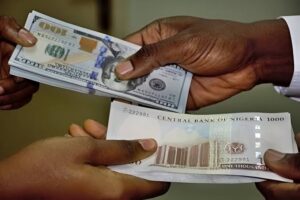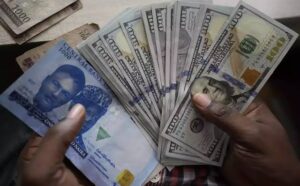
The Nigerian naira showed signs of stability on Tuesday, trading around ₦1,383 per dollar at the official market, as the first quarter of 2026 closed on a cautiously optimistic note.
After weeks of fluctuations earlier in March, the local currency recorded a modest gain, opening at ₦1,385.60/$ and strengthening slightly to ₦1,383.37/$ by mid-morning trading.
Stability at the Official Market
The steady performance at the official window is largely linked to ongoing reforms by the Central Bank of Nigeria (CBN), particularly the upgraded Electronic Foreign Exchange Matching System, which has improved transparency and price discovery.
Despite this progress, market watchers remain cautious. End-of-quarter demand from businesses and shifting capital flows continue to put pressure on the system, leaving traders alert to any sudden changes.
Parallel Market Shows Similar Trend
In the parallel (black) market, the naira also maintained relative stability. Rates across major cities like Lagos and Abuja hovered between ₦1,405 and ₦1,420 per dollar.
Notably, the gap between the official and parallel market rates has narrowed significantly to about ₦22–₦35, a development analysts see as a positive step toward exchange rate alignment.
Recent policies targeting remittances—especially directives requiring inflows to pass through naira settlement accounts—are already influencing market behaviour and reducing speculative demand ahead of full implementation in May.
Pressure on External Reserves
While exchange rate stability offers some relief, Nigeria’s external reserves are under strain. Recent data shows a decline of about $547 million, dropping from $50.03 billion in mid-March to $49.48 billion by the end of the month.
This drop is largely attributed to continued market interventions and the servicing of external debt obligations.
Mixed but Encouraging Economic Signals
On a more positive note, key economic indicators are showing improvement. Inflation has eased to 15.06% in February, its lowest level in over four years.
Crude oil prices also remain strong, with Bonny Light trading above $103 per barrel, helping to support government revenue despite production challenges.
In a significant policy move, the CBN has lifted restrictions on international oil companies, allowing them full and immediate repatriation of export proceeds—a step experts believe could boost investor confidence and attract more foreign inflows.
What to Expect Next
Looking ahead, analysts predict the naira may trade within the ₦1,380–₦1,400 range in the near term.
However, this outlook will depend heavily on sustained inflows from key sectors, stable policy direction, and the central bank’s ability to manage external pressures.
For now, while the naira’s stability brings a sense of relief, many are watching closely to see if it can be sustained into the second quarter.