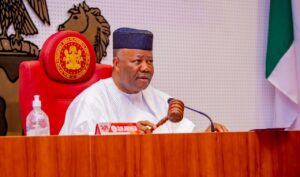
The Nigerian Senate has approved a ₦68.323 trillion budget for 2026, marking a significant increase from the ₦58.47 trillion originally proposed by President Bola Tinubu. The ₦9.85 trillion upward revision comes after the President requested additional funds to cover legacy projects, especially in transportation, health, and judiciary sectors.
The approval followed the adoption of a joint National Assembly report on the 2026 Appropriation Bill.
How the Funds Will Be Used
The breakdown of the revised budget shows:
- ₦4.799 trillion for statutory transfers
- ₦15.809 trillion for debt servicing
- ₦15.427 trillion for recurrent (non-debt) expenditure
- ₦32.287 trillion for capital projects
Additionally, ₦5.71 trillion is earmarked for clearing outstanding capital obligations from the 2025 budget, while ₦2 trillion covers previously omitted projects across the country.
Sectoral Highlights
- Health: ₦482.758 billion
- Ministry of Finance Incorporated (MoFI): ₦478.6 billion
- Judiciary: ₦268 billion, including ₦36 billion for the Supreme Court and ₦98.513 million for the Court of Appeal
- Infrastructure/Feasibility Studies: ₦8.96 billion for major road projects, including the Calabar–Maiduguri and Maiduguri–Sokoto corridors
Extension of 2025 Capital Budget
The Senate also approved an extension of the 2025 capital budget’s implementation deadline from March 31 to June 30, 2026, to allow completion of ongoing projects.
This budget signals the government’s push to strengthen critical sectors while addressing unfinished projects from the previous fiscal year.