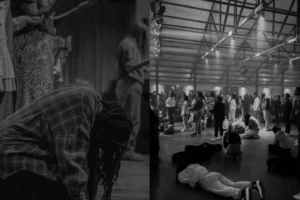
Nigerian human rights activist Randy Peter has ignited conversations across social media after questioning the country’s heavy dependence on prayer despite persistent challenges such as insecurity, poverty, and poor governance.
Speaking during an appearance on the The Honest Bunch podcast, Peter argued that while many Nigerians, including political leaders, openly identify with religious institutions, the country continues to grapple with corruption, economic hardship, and security concerns.
“If Everyone Is Praying, Who Is Stealing the Money?”
During the discussion, the activist challenged the notion that prayer alone can solve Nigeria’s problems, suggesting that meaningful progress requires accountability, competence, and responsible leadership.
“Every politician in this country goes to either a church or mosque, so if all of them are supposedly worshipping God, then who is stealing our money? Did prayer build China? Did prayer build Russia?” he said.
Peter maintained that while faith may play an important role in people’s lives, national development ultimately depends on effective governance, institutional strength, and the willingness of leaders to act in the public interest.
Calls for Accountability and Leadership
The activist further questioned whether decades of religious devotion have translated into tangible national progress, pointing to ongoing security and economic challenges facing the country.
According to him, Nigeria’s development issues cannot be addressed through prayer alone without corresponding efforts to improve leadership, fight corruption, and strengthen public institutions.
“We have prayed for 65 years and have now become the 4th most terrorised country in the world and the global headquarters of extreme poverty,” he added.
His remarks have since attracted widespread attention online, with many Nigerians debating the relationship between faith, governance, and national development.
Mixed Reactions Online
The comments have generated divided opinions across social media platforms.
Some users agreed with Peter’s position, arguing that stronger institutions, accountability, and effective leadership are essential for solving Nigeria’s challenges.
Others, however, criticized his remarks, insisting that faith and prayer should not be dismissed and that spiritual devotion can coexist with good governance and responsible leadership.
Several commenters also argued that corruption, mismanagement of public resources, and weak institutions—not religion—remain the country’s most pressing problems.
As the debate continues, Peter’s comments have reignited broader discussions about the role of faith, leadership, and civic responsibility in shaping Nigeria’s future.
Watch the video below…
Randy Peter blowing hot on Nedu’s podcast
“Every politician in this country goes to either a church or mosque, so if all of them are supposedly worshiping God, Nedu, who’s stealing our money? Which prayer build china? Which prayer build Russia ? The wealthiest people in the… pic.twitter.com/bX0byTY7EQ
— Oyindamola🙄 (@dammiedammie35) June 23, 2026