

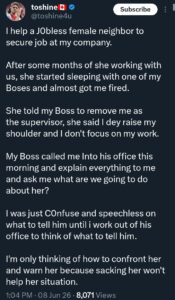





If the events occurred as described, there are several issues involved, and it’s important to distinguish between allegations, workplace performance concerns, and personal conflicts.

From the employee’s account:

  1. He says he helped a neighbour get a job at his company.
  2. He alleges that she later developed a relationship with a senior official.
  3. He claims she made negative comments about his conduct to management.
  4. His boss reportedly informed him of the complaints and asked for his perspective.

Without hearing from the woman, the senior official, or the company, it is impossible to know whether the allegations against him were malicious, exaggerated, or based on genuine workplace concerns.

From a professional standpoint, the most constructive approach would likely be:

  • Stay calm and gather facts. Emotional reactions can worsen workplace disputes.
  • Ask management for specifics. If concerns have been raised about performance or behaviour, he should request concrete examples and an opportunity to respond.
  • Document interactions. Keeping records of work performance, communications, and responsibilities can help if disputes escalate.
  • Avoid threats or intimidation. Confronting a colleague aggressively could create additional problems.
  • Focus on workplace issues, not personal relationships. Whether colleagues are friends, neighbours, or romantically involved should be separate from discussions about job performance.
  • Use company procedures. If he believes false allegations were made, he can raise the matter through HR or the appropriate reporting channels.

The fact that he does not appear eager to have her dismissed may be viewed positively by some observers, as it suggests he is considering the broader consequences of the situation. However, resolving the issue through professional workplace processes is generally more effective than handling it solely through a personal confrontation.

Stories like this often generate strong reactions online because they touch on themes of loyalty, gratitude, workplace politics, and power dynamics. But until all sides are heard, the claims remain one person’s account of the situation rather than established facts.

Leave a Reply

Your email address will not be published. Required fields are marked *